
How to fix an Array Index Out Of Bounds Exception in Java In this article, we will look at An Array Index Out Of Bounds Exception in Java, which is the common exception you might come across in a stack trace. An array … Read More

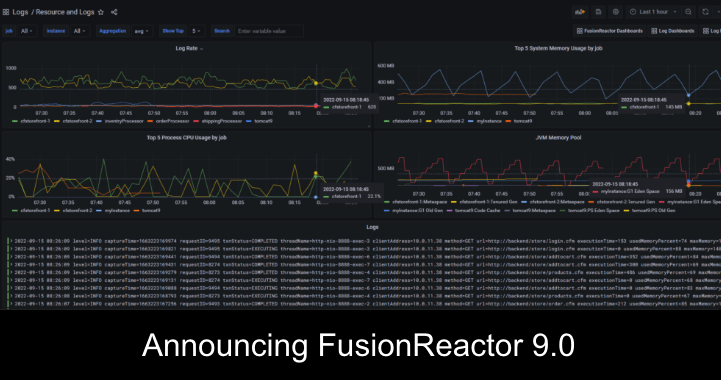
Announcing FusionReactor 9.0
We are very proud to announce the release of FusionReactor 9.0, which represents a major milestone for FusionReactor and has been almost 2 years in the making. FusionReactor has always been about helping engineers, support, and DevOps to get to … Read More
OpenTelemetry and how it will influence FusionReactor
OpenTelemetry and how it will influence FusionReactor At the core of FusionReactor, we have an agent, and the agent’s task is to instrument the application and capture telemetry in the form of metrics and trace data. Every journey in the … Read More
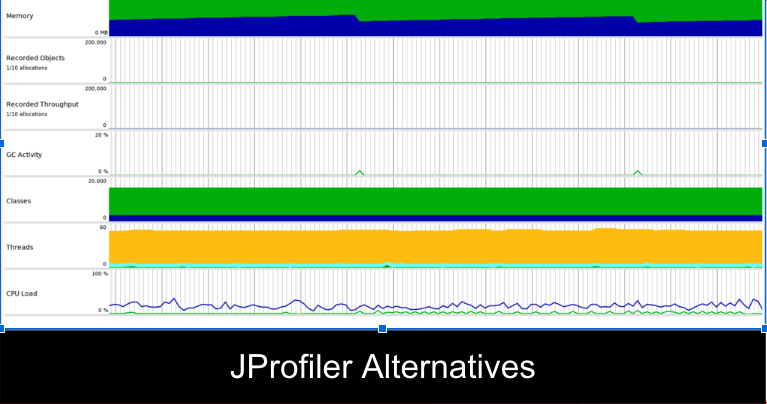
JProfiler alternatives
JProfiler alternatives – Comparing JProfiler with FusionReactor – the battle of the profilers In this post, we look at the JProfiler alternative FusionReactor and how the two compare. In our previous blog posts, we compared FusionReactor with open source java … Read More
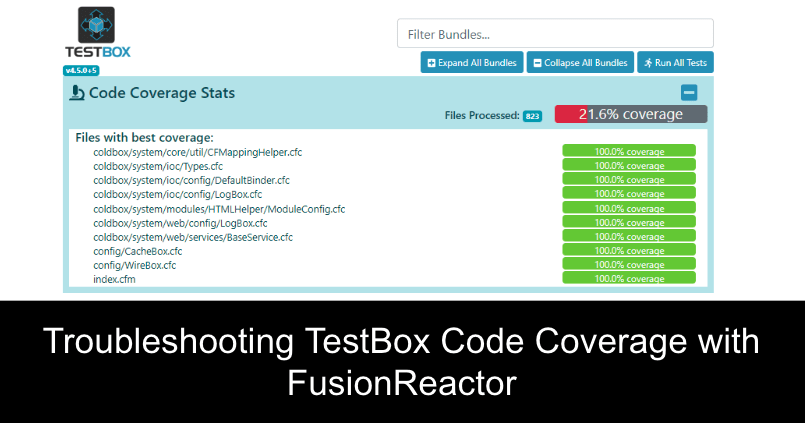
Troubleshooting TestBox Code Coverage with FusionReactor
This blog will investigate troubleshooting TestBox Code coverage using FusionReactor. What is TestBox? TestBox is a robust testing framework for ColdFusion (CFML) that many developers rely on for producing both unit and behavior-driven (BDD) tests for their web applications. What … Read More
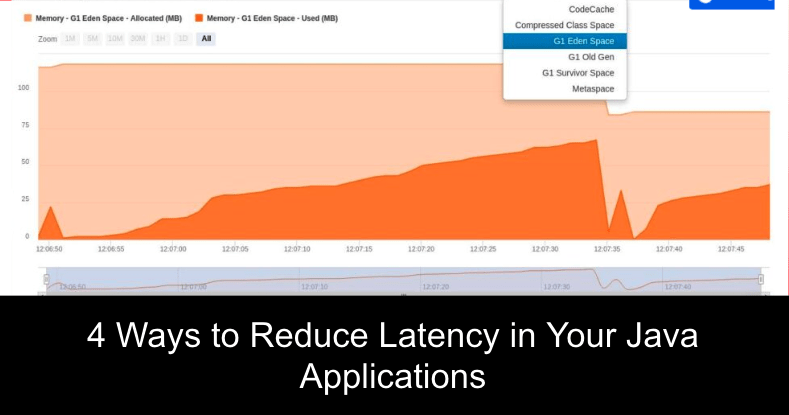
4 Ways to Reduce Latency in Your Java Applications
4 Ways to Reduce Latency in Your Java Applications Latency refers to the processing delay when you run your applications. For your Java applications, this overhead can normally be attributed to the tuning in your Java Virtual Machine (JVM). The … Read More
FusionReactor 8.8.0 Released
FusionReactor 8.8.0 has been released with the following enhancements: We now will send CF metrics up to the cloud Display additional DB request details, such as row count and DB, and API summary information The graph rendering is now capable … Read More

Test testimonial
“Fusion Reactor is a must have for a production ColdFusion environment.” What do you like best? FR will help you find the cause of errors you can’t find any other way. It is a deep rich product, so it is … Read More
Test testimonial
“Fusion Reactor is a must have for a production ColdFusion environment.” What do you like best? FR will help you find the cause of errors you can’t find any other way. It is a deep rich product, so it is … Read More
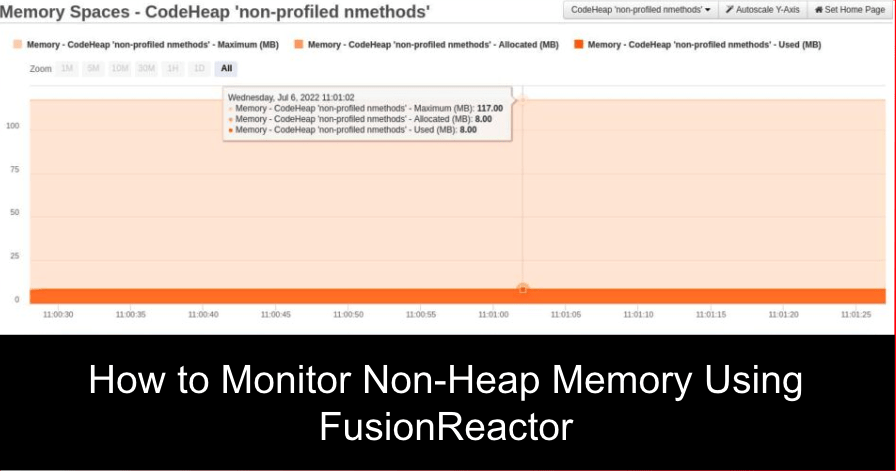
How to Monitor Non Heap Memory Using FusionReactor
How to Monitor Non-Heap Memory Using FusionReactor In order to monitor non-heap memory, we first need to understand what it is. Non-heap memory refers to native memory that the JVM uses for some of its operations. This memory is used … Read More
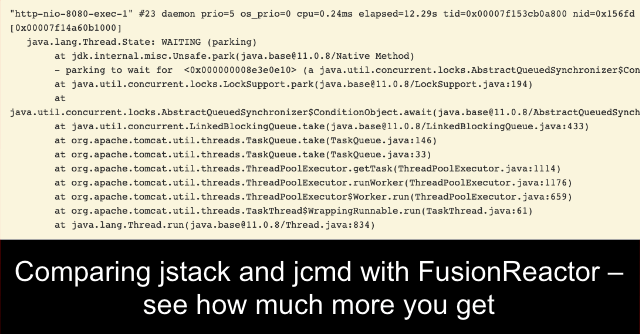
Alternatives to jstack and jcmd
Alternatives to jstack and jcmd Comparing jstack and jcmd with FusionReactor – see how much more you get In one of our previous blog post, we compared Java VisualVM with FusionReactor. Today we will look at alternatives to jstack and … Read More
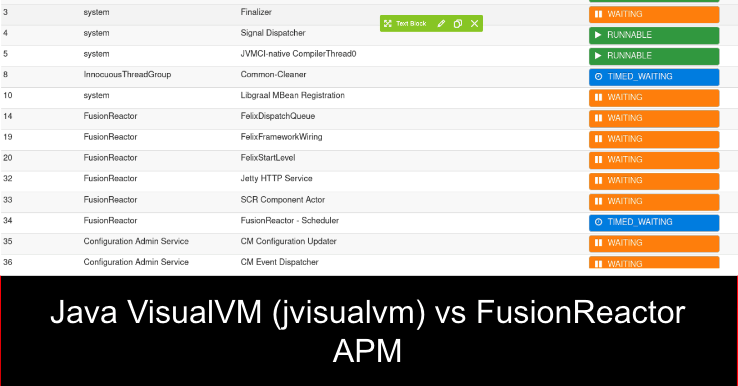
Java Visualvm alternatives
What can FusionReactor (the Jvisual alternative) do that Java VisualVM can’t? This article compares both tools; which will work best for your use cases? … Read More
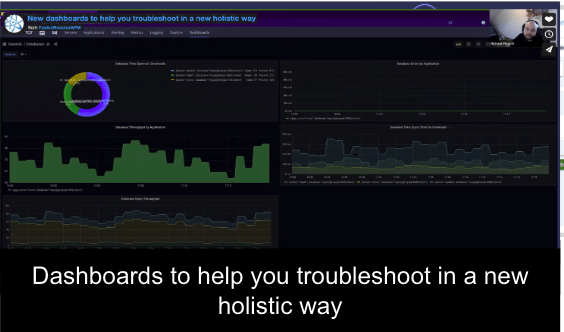
New dashboards to help you troubleshoot in a new holistic way
New dashboards to help you troubleshoot in a new holistic way FusionReactor is evolving from APM to an observability platform, this means that we will be offering new dashboards to help you troubleshoot in a new holistic way with support … Read More
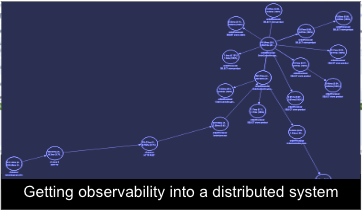
Getting observability into a distributed system
Get observability into a distributed system FusionReactor is evolving from APM to an observability platform that allows you to get observability into a distributed system. This means that we will be offering a more holistic view of distributed services with … Read More
How to debug in production
How to debug in production Debugging in production has always been something that we try our best to avoid, with multiple QA phases, staging environments, and automation to stop production bugs. Despite this, occasionally a bug will find its way … Read More
Understand how long ColdFusion requests are taking to execute
Using FusionReactor Cloud Transactions to understand how long ColdFusion requests are taking to execute In his recent blog, Ben Nadel explains how he is using the FusionReactor Cloud tracked transactions to understand how long ColdFusion requests were taking to execute. Ben explains … Read More
How to troubleshoot slow running requests in microservices
How to troubleshoot slow running requests in microservices we are running 3 microservices and for this use case, we have an issue with a long-running request. We will then take a look at FusionReactor and see how it picks … Read More
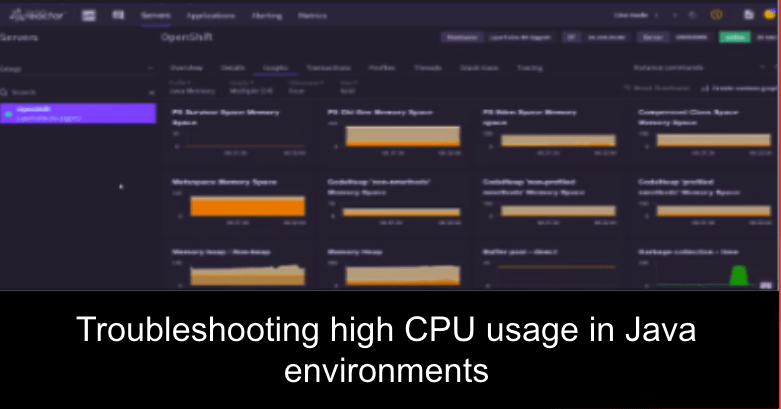
Troubleshooting high CPU usage in Java environments
How to troubleshoot high CPU usage In this scenario, our CPU is spinning at an abnormally high rate. We will then take a look at FusionReactor and see how it picks up this issue. For the test environment, we are … Read More
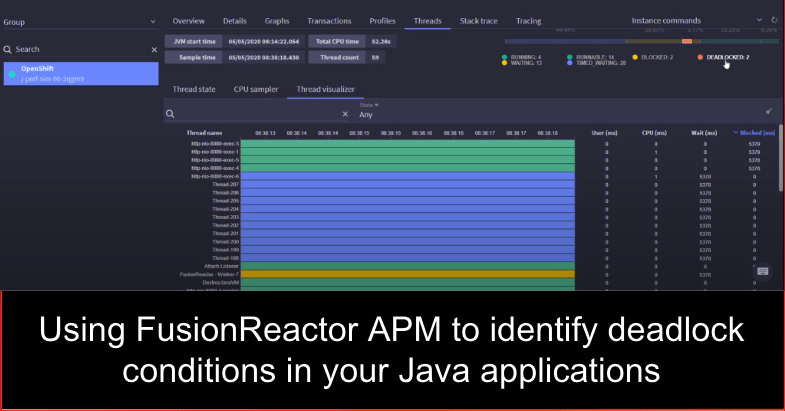
Using FusionReactor APM to identify deadlock conditions in your Java applications
How to identify deadlock conditions in Java In this use case, we will examine how to identify deadlock conditions in Java environments. We will then take a look at FusionReactor and see how it picks up this issue. For the … Read More
LogQL cheat sheet
LogQL Cheat Sheet This cheat sheet highlights different patterns for querying FusionReactor LogQL. Introducing FusionReactor Log query Language FusionReactor queries log with its unique log query language called LogQL, often distributed as grep besides labels for filtering. There are two … Read More
Parse Variable Patterns using Regex
What is parsing? Parsing is a very important process when handling logs because it lets users filter logs in useful ways. Unstructured logs can easily be shared into attribute (key/value) pairs, which helps to create improved alerts and charts. There … Read More
How to Parse JSON data in JavaScript
Assuming that you’ve used a web app before, there is a strong possibility that it uses JSON format to create a framework, store and transmit data between its servers and connected devices. JavaScript Object Notation, which is popularly known as … Read More
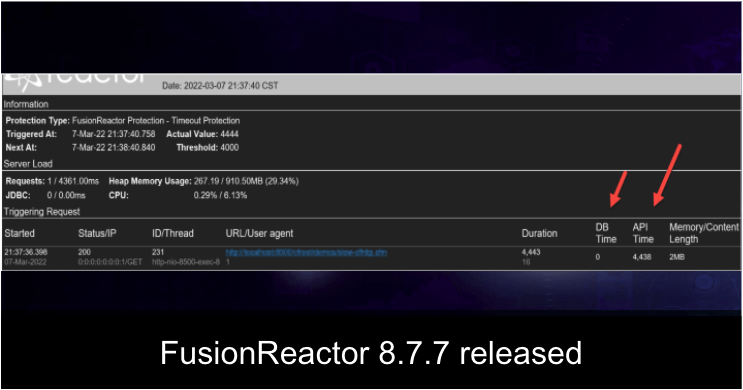
FusionReactor 8.7.7 Released
FusionReactor 8.7.7 has been released. With enhancements including improved alert emails, SpringBoot fixes, and more. Enhancements to Crash Protection API and DB time can now be found in both the request log and Crash Protection emails, making it easier to … Read More
New beta release – log alerting
Our most powerful alerting engine Log Alerting is now in beta and all beta users will immediately have access to this powerful query-based alerting engine. Set alerts on FusionReactor logs and ingested third-party logs. Your log data can be used … Read More
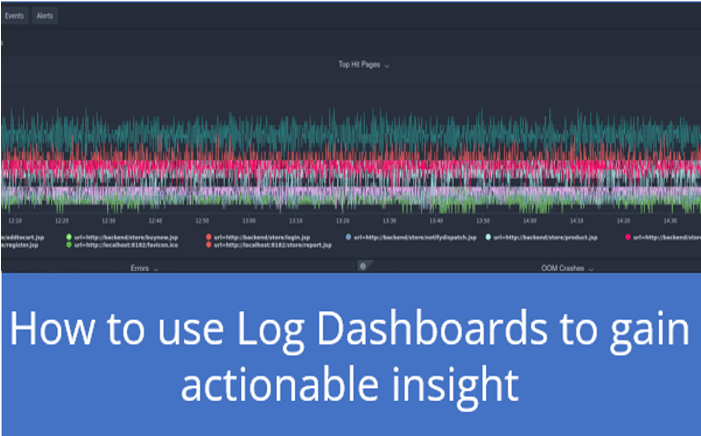
How to use Log Dashboards to gain actionable insight
How to use Log Dashboards to gain actionable insight Logs have many valuable functions; they contain a considerable amount of data. Using log query languages such as LogQL allows you to get fantastic insights, but they rely on running queries … Read More
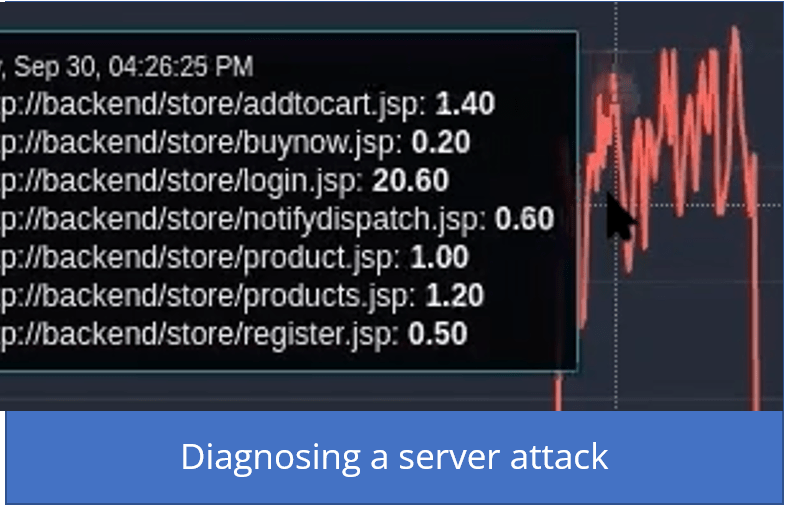
Diagnosing a server attack using logs
Diagnosing a server attack using logs Imagine that your server is under attack. How would you diagnose the issue and understand its impact? You may have been aware of previous attacks and have seen significant spikes coming into your server. … Read More
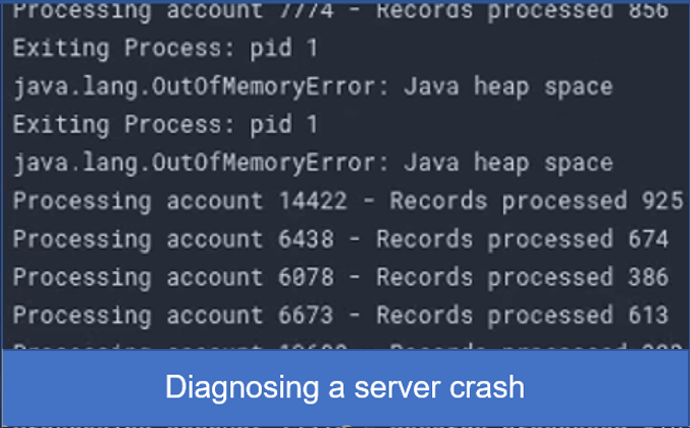
Using logs to easily diagnose a server crash
Reasons for a server crash Java can crash in several ways and for several reasons. Sometimes it’s not easy to diagnose a server crash. For example, Your JVM may still be operational, but you cannot process requests anymore. Part of your application breaks … Read More