

Organizations using integrated CF solutions typically resolve performance issues significantly faster while reducing vendor management overhead. Here’s why the smartest CF teams are consolidating their toolchain. The Challenge: CF Performance Issues Are Getting More Expensive Industry reality: Many ColdFusion performance issues … Read More
Evangelism

FusionReactor Event Snapshot: Debug Production Bugs Without Downtime
Some bugs only happen in production. They don’t show up in development. They hide during staging tests. And yet, they still find their way to your users – causing frustration, errors, and support tickets. These are the elusive, real-world bugs … Read More
Retrofitting your existing Java JVM for TLS 1.2 + Let’s Encrypt
On 30 September 2025 @ 23:59 UTC we will Disable TLS 1.0 / 1.1 on every public FusionReactor endpoint (licence, downloads, Cloud ingestion). Replace our Sectigo certificate chain with Let’s Encrypt ISRG Root X1/X2. If your server already supports TLS … Read More

OpsPilot’s new Web Search Toggle
Take control of your queries with OpsPilot’s new Web Search Toggle We’re excited to introduce a simple but powerful update to OpsPilot: the Web Search Toggle – designed to give you more control over how your questions are handled, especially … Read More

Debugging in Production: Why FusionReactor’s Debugger might be your new best friend
Let’s face it – debugging in production has always been a bit of a nightmare. You’re getting reports of a mysterious bug, maybe it’s a null pointer exception or some bizarre edge case that only happens at 3:00 AM when … Read More

Unlock ColdFusion Performance Insights with FusionReactor Cloud’s Grafana MCP Integration
For ColdFusion teams serious about application performance, this integration offers an unprecedented level of insight with minimal setup effort.
Rather than spending hours poring over logs and metrics dashboards, you can have conversations with AI that draws directly from your live monitoring data. Whether you’re dealing with memory leaks, slow queries, or unexpected errors, the FusionReactor Cloud and Grafana MCP integration puts the answers at your fingertips, allowing you to spend less time troubleshooting and more time building exceptional applications.
… Read More
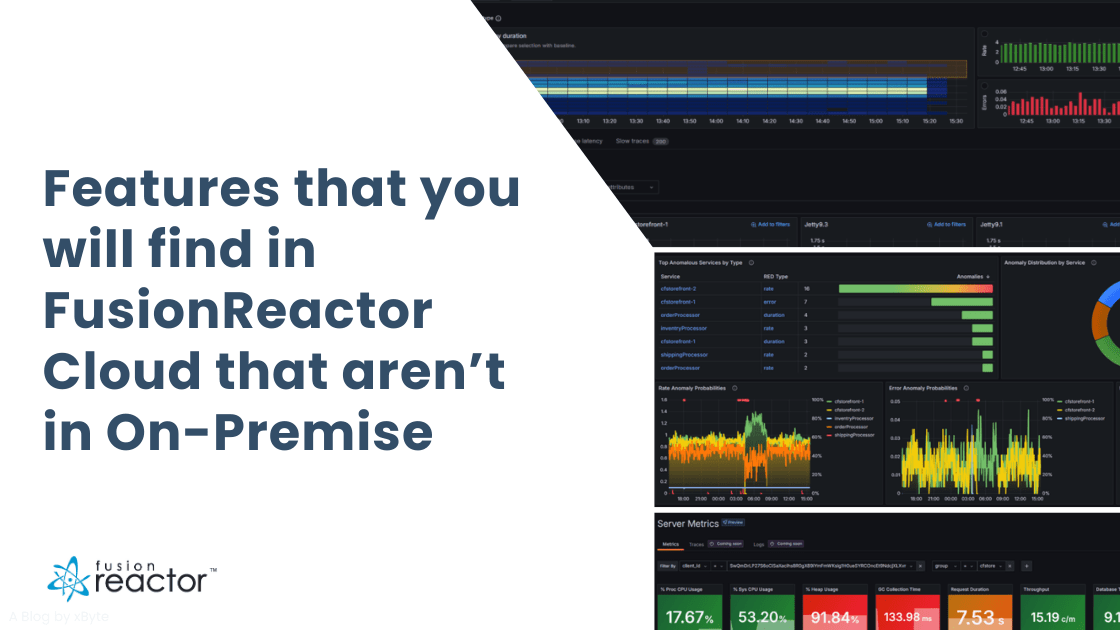
Top Features in FusionReactor Cloud That You Won’t Find in On-Premise
The shift to cloud-based application performance monitoring isn’t just about moving your data off-site—it’s about unlocking capabilities that simply aren’t possible with traditional on-premise solutions. FusionReactor Cloud represents a new generation of monitoring tools that leverage the power of cloud … Read More
Post-Crash Troubleshooting with FusionReactor Cloud: A Step-by-Step Guide
Imagine this: It’s the middle of the workday, and your application server suddenly crashes. Services are offline, users are frustrated, and you’re under intense pressure to find out what went wrong—and fast. This is where FusionReactor Cloud becomes an invaluable … Read More

How FusionReactor Helps You Respond To a Server Crash
Imagine this: you’re in the middle of a packed workday when your server suddenly crashes. Everything grinds to a halt. You’re now racing against the clock to find out what happened—and get your systems back online as quickly as possible. … Read More
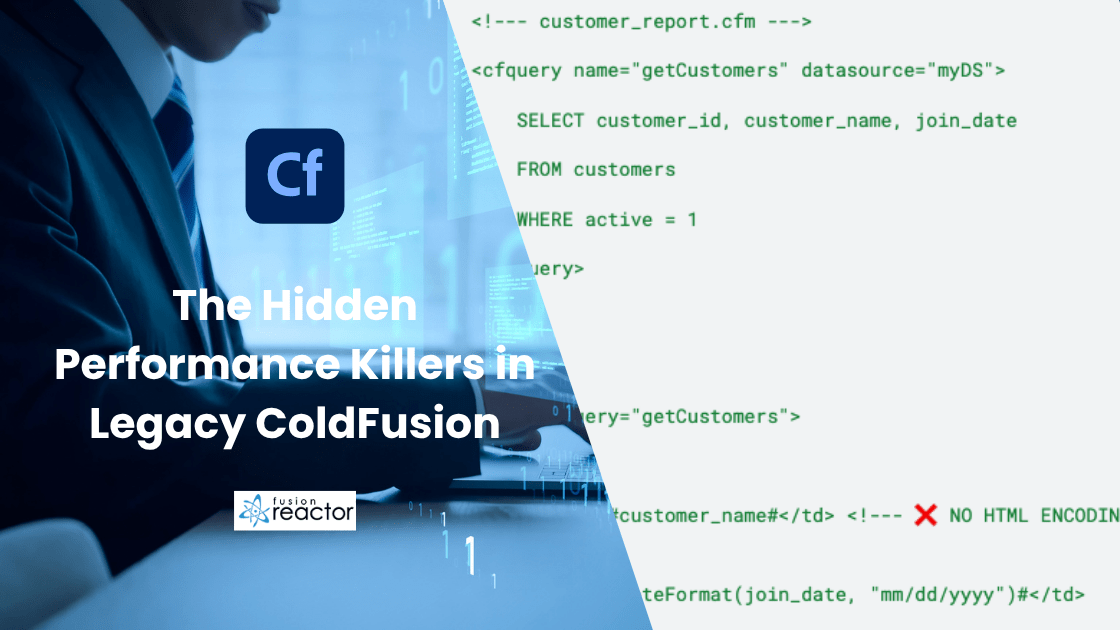
The Hidden Performance Killers in Legacy ColdFusion
Every ColdFusion developer has inherited “that” application. You know the one – it was built in 2008, has grown organically over the years, and now takes 30 seconds to load a simple report. The original developer left years ago, and … Read More