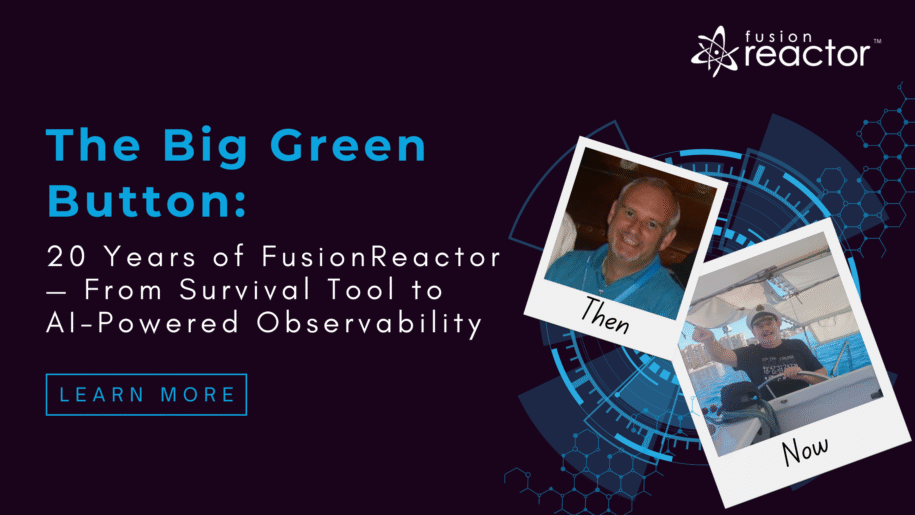
20 Years of FusionReactor — From Survival Tool to AI-Powered Observability
By Darren Pywell, CTO of FusionReactor
It started with a wall.
Specifically, the wall between my office and a key customer’s team. Every time their critical ColdFusion application froze, their project lead would walk up the stairs and let us know – bluntly – that things were bad.
We had built an incredible system using ColdFusion, but when it failed, it was a black box. We had no idea what was happening inside. And one afternoon, we received the ultimatum: fix it, or lose the project.
That weekend, sitting at my dining table, I realized we weren’t looking for a better way to search; we needed a better thing to search with. We needed a way to see inside the running engine while it was failing. That uncomfortable, high-stakes moment was the spark that created FusionReactor.
The Product We Had to Build
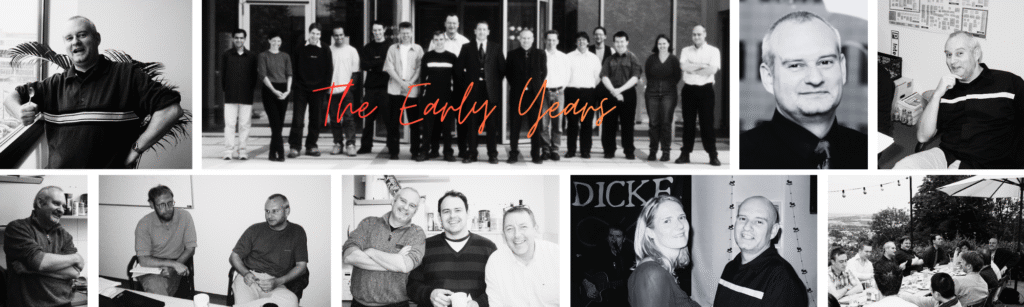
In the earliest days, FusionReactor was purely a tool for our own survival. Our first real business vision was simple: productize what we’d built for ourselves and give the ColdFusion world the same visibility that had saved our business.
We moved fast. Development began on October 5th, 2005, and the first version went on sale on December 5th, 2005. The team was on fire.
I still remember the first sale, three weeks later. I called my business partner and said, “Wow… someone bought it. They actually want it. We could be onto something.” In the first year, we sold nearly 400 licenses.
The power of community
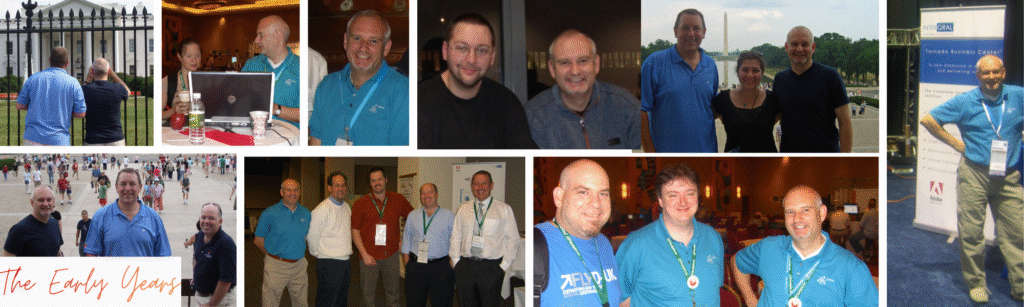
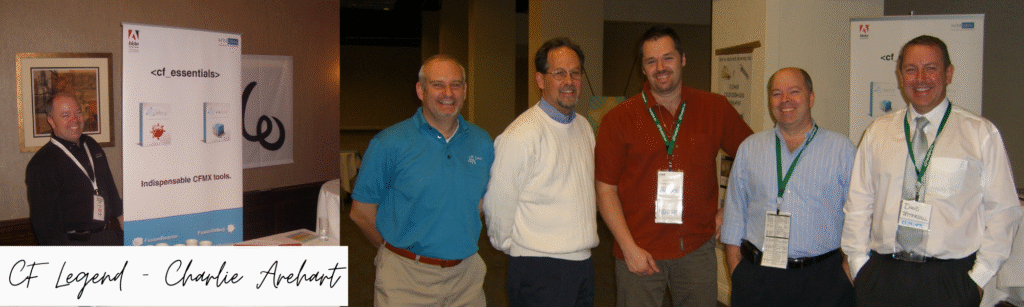
The acceleration of FusionReactor is a testament to the power of community. Shortly after launching, I sent a chance email to Charlie Arehart – a legend in the CF world. His support, along with that of a small group of other community leaders, was crucial. Charlie took a significant reputational risk by consistently encouraging his clients to try our tool, and his belief in and direct line to our team enabled us to quickly earn the trust and reliability required for a production-grade product.
“Growth came the hard way: by trust earned through performance, reliability, and relationships.”
The Turning Point
Our biggest challenge in the beginning was persuading people to install advanced software into their live production systems. It took time, trust, and our most significant early innovation: FusionReactor Version 3 with the JDBCWrapper.
Previously, ColdFusion was known for SQL issues. Queries were the most common performance bottleneck. Version 3 changed everything, allowing developers to see the exact queries a page executed and how long each took. That instant visibility was a game-changer, immediately propelling FR into a new category of indispensability. But technology alone doesn’t build a company – people do.
The Team Behind the Vision
We’ve always maintained a startup culture-we move fast and believe we can solve any problem. It’s a mentality built into our DNA.
The most rewarding part of leading this team has always been the people and the impact we make together. I often share the story of a customer who discovered FusionReactor late one Thursday night. Their app was crashing constantly, and they’d been told to fix it by Friday or lose their job. They installed FR and identified and resolved the issue within minutes.
My message to the team is simple: You don’t just build software-you make a real difference to real people.
Leading FusionReactor has taught us to rely on each other. I remember an engineer accidentally committing a password to a public repo. He brought it forward immediately. What followed was a 12-hour, hyper-professional, no-blame war room marathon to check every corner of our system. We emerged from it knowing one thing for certain: we truly are a team.
Growing Up: Observability and OpenTelemetry
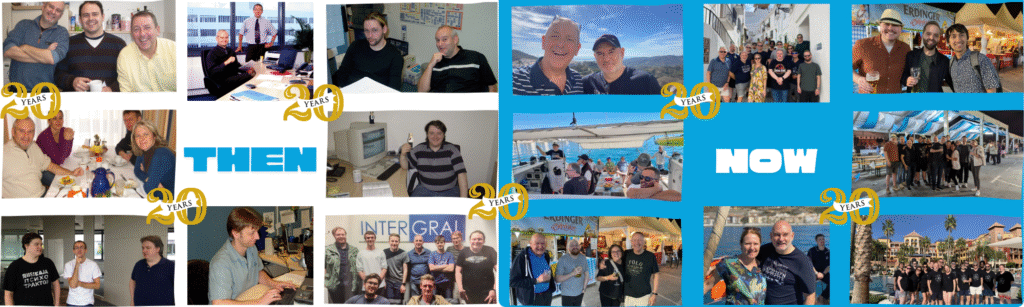
Our evolution from a survival tool into a full observability platform wasn’t a change in direction — it was the same mission operating at a much larger scale.
As our customers grew, they needed more than point-in-time insight. They needed history, correlation, durability and much more. To meet those needs, we built FusionReactor Cloud to provide persistent storage for logs, metrics, and traces.
At the same time, we reworked how the FusionReactor agent captures data, allowing us to expand beyond ColdFusion into the Java ecosystem and many other runtimes. That shift opened the door to supporting modern, heterogeneous stacks without sacrificing the simplicity that defined FusionReactor from the start.
A crucial part of this evolution was our early adoption of OpenTelemetry (OTEL). Rather than locking customers into proprietary pipelines, we chose to build on open standards. Many people don’t realize just how OTEL-compatible we are. FusionReactor Cloud can ingest data from any OTEL-compatible source, and the FusionReactor agent can send data to other OTEL-based platforms — including Datadog, New Relic, and many others.
A 20-Year Dream: The Big Green Button
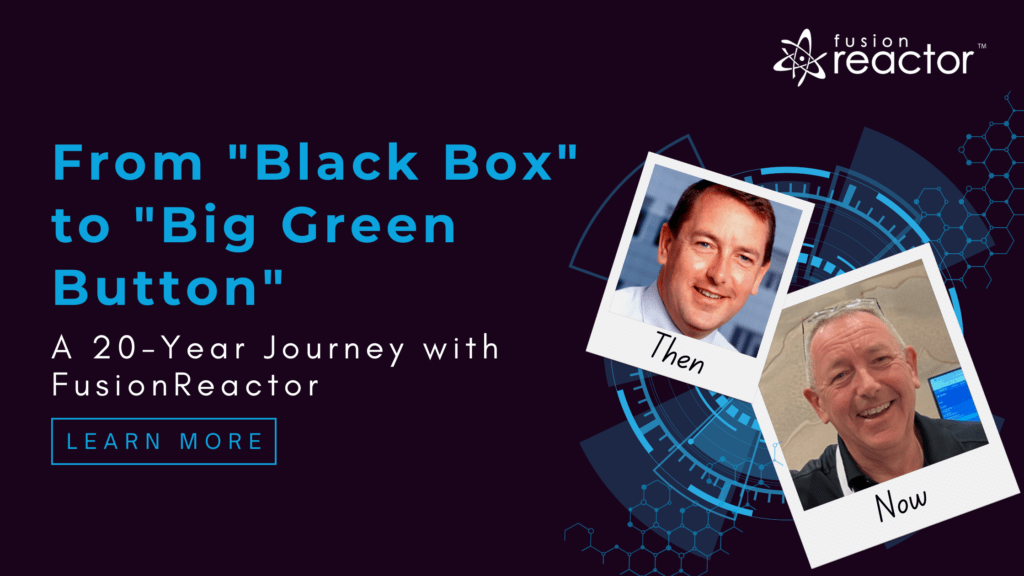
My experience building large-scale application monitoring at Hewlett-Packard taught me that true monitoring is complex. My vision for FusionReactor was to take all that complexity and deliver immediate value with the least possible effort for the customer.
But even then, there was a bigger vision-one that many people told me was a dream for years: the “Big Green Button”. The idea that you could push a button and FusionReactor wouldn’t just show data – it would tell you what was wrong with your software.
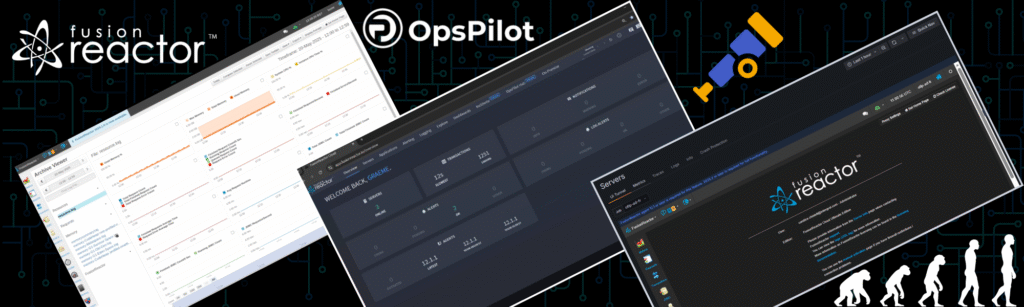
This dream became a reality in 2017 with the emergence of modern LLMs. Our early work with OpenAI led to the creation of OpsPilot, which we believe was the first AI agent for observability.
Today, the vision is clearer than ever: FusionReactor is becoming an autonomous, AI-based incident remediation platform. We are massively expanding OpsPilot heading into 2026.

Fast Answers, Then and Now
If I could sum up the FusionReactor journey in three words, they would be: Fast, visionary, life-changing.
FusionReactor’s greatest impact has been changing ColdFusion from a black box into something developers could truly observe. I strongly believe we’ve played a role in ColdFusion’s longevity. We also created an agent that delivered instant observability with minimal overhead-install in a minute, observe locally, no heavy monitoring infrastructure required. That is a legacy I am immensely proud of.
Today, FusionReactor is mature, experienced, and highly competent, with the Cloud and OpsPilot adding dimensions people couldn’t have imagined 20 years ago. But at its core, it’s still about getting answers as fast as possible.
Thank you.
The advice I’d give my 2005 self is the same advice I’d give today: believe in your vision, rely on your team, and keep going no matter what.
As we celebrate this 20-year journey, my message to our team, our customers, and our partners is from the bottom of my heart: