
In the world of modern observability, the “Sorting Office” of your telemetry data is just as important as the data itself. Whether you are shipping traces, metrics, or logs to FusionReactor Cloud, you generally have two main choices: the industry-standard OpenTelemetry Collector or the newcomer Grafana Alloy.
While both tools do the same basic job—receiving, processing, and exporting OTLP data—they cater to very different workflows.
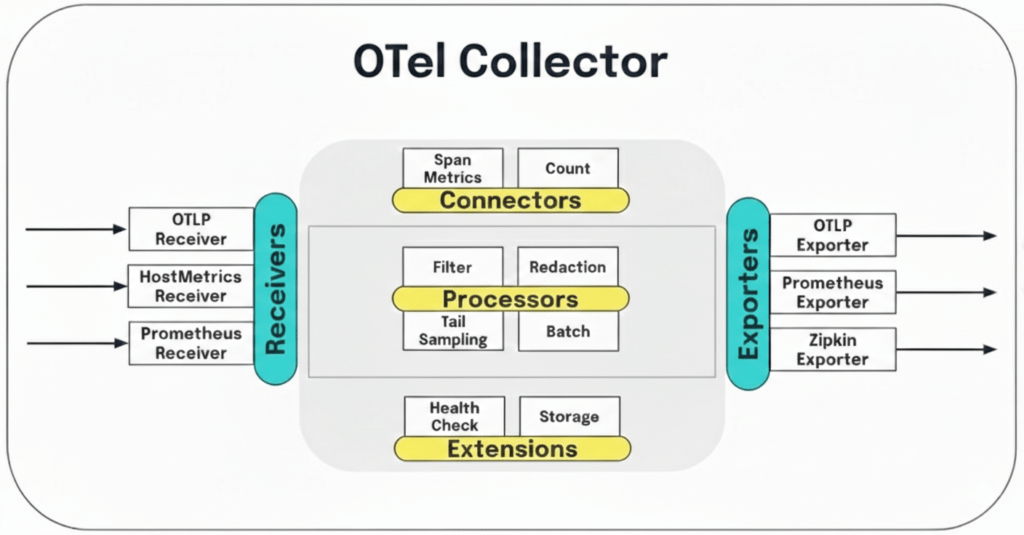
The OpenTelemetry Collector (Contrib)
The “OG” of the space, the OTel Collector is a vendor-agnostic proxy that serves as the central hub of an observability pipeline.
Pros:
- Industry Standard: It is the default choice for the CNCF ecosystem and has the widest community support.
- YAML-Based: If your team is comfortable with Kubernetes and standard infrastructure-as-code, the indentation-based YAML configuration will feel like home.
- Stability: Features such as the memory_limiter ensure the collector remains healthy even during massive data spikes.
Cons:
- Visibility: Troubleshooting is done primarily through terminal logs. There is no native dashboard to see “where” data is getting stuck.
Grafana Alloy
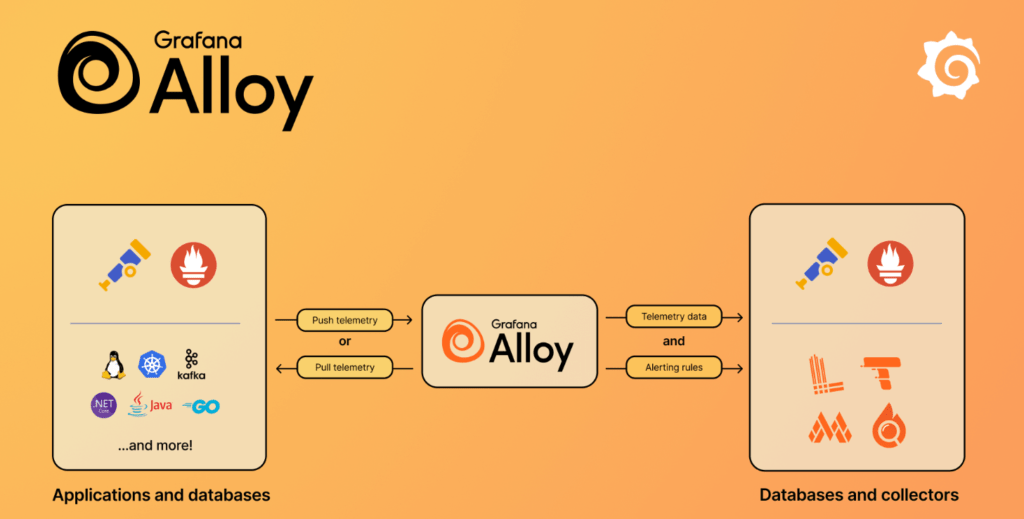
Grafana Alloy is a “big tent” distribution that natively supports OpenTelemetry, Prometheus, and Loki formats in a single agent.
Pros:
- The UI Dashboard: Alloy’s standout feature is a local web UI (usually at port 12345) that provides a live, visual flowchart of your pipeline.
- Flow Configuration: Uses a programmable, component-based language (Alloy Flow) that is modular and easier to scale for complex routing.
- Unified Agent: It handles Prometheus scraping more natively than the standard OTel collector.
Cons:
- Learning Curve: You have to learn a new configuration syntax (HCL) rather than staying with standard YAML.
The Verdict: Which is “Best”?
| Use Case | Recommended Tool | Why? |
|---|---|---|
| "Set it and Forget it" | OTel Collector | A standard, reliable pipeline that uses the same YAML format as the rest of your stack. |
| Complex Data Routing | Grafana Alloy | Transform data in complex ways or scrape multiple sources (like Prometheus) simultaneously. |
| High-Visibility Needs | Grafana Alloy | See exactly how your data is moving (or failing) through a visual UI. |
Final Thought
The best part about the modern observability landscape is that both tools use the OTLP standard. This means you can start with the OTel Collector today and switch to Alloy tomorrow (or vice versa) without changing a single line of code in your applications.
As long as you have your FusionReactor API Key ready, your data will find its home in the cloud regardless of which “middleman” you choose.