An Interview with David Tattersall, CEO of Intergral – makers of FusionReactor
It began with a performance crisis: a high-stakes customer project running on ColdFusion, which, when it failed, gave engineers zero visibility into the cause. That challenge led co-founders David Tattersall and Darren Pywell to ask a fundamental question: What if debugging didn’t have to be guesswork? What if you could just press a “Big Green Button” and the solution appeared? Two decades later, FusionReactor has transformed from that essential internal survival tool into an AI-powered observability platform. As we celebrate this 20-year milestone, CEO David Tattersall reflects on the company’s defining moments – from the crisis that sparked its creation and the resilience that saved it during a global recession, to the ultimate realization of its founding vision through OpsPilot.
Founding Vision & Origins
What inspired the creation of FusionReactor? Was there a specific moment or problem that sparked the idea?
Absolutely – there was a very specific moment.
In the early 2000’s we had built a huge ColdFusion-based document management system for Hewlett-Packard. Sometimes we’d come up against performance or stability issues, but we constantly battled the same underlying problem: ColdFusion was a complete black box. When something went wrong, you couldn’t see inside it, you couldn’t trace execution and debugging felt like guesswork.
By summer 2005, Darren (my co-founder and CTO) built a small internal monitoring tool so we could finally see what ColdFusion was doing. The moment we used that prototype, everything clicked. We immediately knew:
“If this is solving our pain, it will solve the pain for every ColdFusion developer.”
That was the moment FusionReactor was born. At the same time, we came up with the concept of the “Big Green Button” – this was our vision of creating a solution which would simply solve the problem – just as simple as clicking on a button.
What was your vision for FusionReactor in the early days, and how has that vision evolved over time?
Our early vision was really quite simple:
Help developers find issues faster, fix them faster, and prevent them from happening again.
That became our original slogan “Find It. Fix It. Prevent It.” and this slogan still holds up after all those years.
Over time, the vision expanded. We realized observability is not just about presenting dashboards, it’s really all about identifying the exact problem, telling you what the problem is, why it’s happening and how you should fix it.
Now with OpsPilot, we’re taking the final step toward our early “Big Green Button” dream; a system that not only detects the problem, but explains it, prioritizes it and helps fix it automatically.
What was the biggest challenge you faced in bringing FusionReactor to market, and how did you overcome it?
Speed and uncertainty.
We had three months to go from “interesting prototype” to a real commercial product including website, licensing system, ordering system, everything and remember, this was 2005, so the age of off-the-shelf services didn’t even exist.
We overcame it through obsession and belief. We had total belief that we were building something which would help developers and they would want to have. We literally worked nonstop and shipped version 1 in December 2005. Looking back, I can see that speed and resourcefulness is really a huge part of our DNA.
Innovation & Evolution
Which milestones or product releases do you consider the turning point for FusionReactor?
Across 20 years, we’ve had so many releases and innovations. Back in 2008 our release of FusionReactor 3.0 was a major milestone. This release built upon our concept of server “self healing” and included over 150 improvements and new features – it was a huge release that our customers very well received.

Another major turning point was our Production Debugger, released in 2015. It was the first technology in the world that enabled safe, on-the-fly debugging directly in a live production JVM, without even impacting performance. Darren, my partner and CTO applied successfully for a patent for it – it was certainly a major milestone for us.
That release fundamentally changed how developers troubleshoot real-world issues and even today it remains one of FusionReactor’s most unique and differentiating capabilities. Customers are still amazed that it works and that it works safely.
It was another moment we proved we could tackle challenges the industry hadn’t even thought of or considered “impossible” and I think this set the stage for even more innovations that followed.
However, the ultimate turning point for FusionReactor has been OpsPilot. We were incredibly early in recognizing how profoundly AI would reshape observability. In fact, we’d been part of the OpenAI beta program for two years before ChatGPT even launched, which gave us a front-row seat to what was coming.
That early insight allowed us to release OpsPilot v1 in May 2023, making us one of the very first companies, if not the first, to integrate a generative AI engine directly into a commercial monitoring and observability platform.
Since then, OpsPilot has grown from a feature into the centerpiece of our future. It represents the culmination of everything FusionReactor has been building toward for 20 years: transforming raw telemetry into understanding, explanation, and action.
And in early 2026, we will take the natural next step of rebranding FusionReactor Cloud to be OpsPilot. This is how significant this technology has become, it’s not an add-on, it is the platform.
OpsPilot is the evolution of FusionReactor. It’s the realization of our “big green button” vision and we believe that it’s the future of observability.
FusionReactor has transformed from a ColdFusion monitoring tool to a full observability and AI-driven platform. When did you realize we needed to expand beyond our original focus?
We realized very early on that FusionReactor had to grow beyond ColdFusion. The first major signal came around 2010, when we built FusionAnalytics. That was our first step into storing telemetry, analyzing it across time, and giving developers a broader view of system behavior. It pushed us to think in terms of observability, not just monitoring.
But the real inflection point came when we joined the OpenAI beta program, two years before ChatGPT even launched. We understood immediately that AI would transform how engineers interact with data. That conviction is what led us to build OpsPilot, and in May 2023, we became one of the first companies to release a generative AI assistant inside a commercial monitoring solution.
At that moment, it was clear that we weren’t just expanding beyond ColdFusion, we were redefining what observability could be.
Today, OpsPilot isn’t a feature; it’s the natural evolution of FusionReactor, and in 2026, FusionReactor Cloud will officially be rebranded as OpsPilot, because AI-driven reasoning has become the core of the platform.
So the realization didn’t happen all at once, it was a progression, from analytics, to cloud, to AI – but the destination was obvious:
Developers don’t just need more data. They need systems that understand and are able to interpret the important data and help them act on it.
That’s the direction which we committed to, long before AI became mainstream.
What innovation are you most proud of introducing, and why?
Without question, OpsPilot is the most innovative solution we’ve ever created. It represents the ultimate evolution of everything FusionReactor has been building toward for two decades. Being part of the OpenAI beta program before ChatGPT even launched helped us understand just how transformational AI would become for observability and that early conviction led to the release of OpsPilot in 2023.
OpsPilot isn’t just another feature; it completely changes how engineers interact with their systems. Instead of searching through dashboards or deciphering metrics, they can simply ask questions and get clear, structured, actionable answers. OpsPilot interprets telemetry, understands logs, reviews code, diagnoses anomalies, and recommends next steps, essentially becoming an intelligent teammate inside the workflow.
This shift is from data presentation to data understanding and action and this is why OpsPilot stands as our most significant innovation. It redefines what observability can be, and it marks the beginning of a new era where AI will sit at the center of how engineering, SRE and DevOps teams operate.
Leadership & Culture
How would you describe the culture you set out to build – and how has it shaped the company over the years?
Our culture has always been built around curiosity, innovation, and engineering focus. We’ve always hired people who liked solving hard problems and that’s been essential in allowing us to build things like the production debugger or OpsPilot’s reasoning engine.
We’ve stayed lean, agile, and hands-on. That culture created a company where big ideas don’t get stuck in committees; they get built.
What has been the most rewarding part of building and leading the FusionReactor team?
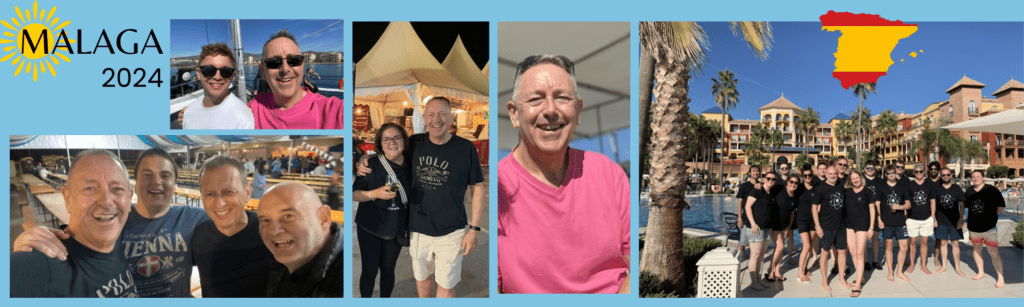
Watching incredibly talented people turn bold ideas into real, working products. Whether it was our debugging breakthroughs, FusionAnalytics, moving to the cloud, or building OpsPilot, every step forward has come from a team that genuinely loves solving problems that matter to developers.
It’s really rewarding to see a small group of passionate engineers consistently deliver innovations that punch so far above their size.
Can you share a memorable moment (serious, funny, or unexpected) that really captures what it’s been like leading FusionReactor?
One of the most defining moments for us came during the 2008 financial crisis. At that time, our business rested on two pillars, FusionReactor and external software development work. Unfortunately, we lost our largest development customer almost overnight as they outsourced s/w development to low-cost regions. In the span of three months, 65% of our company revenue disappeared.
Intergral was celebrating its 10-year anniversary that year, but it was far from certain we would make it to year eleven. Through sheer determination and the tough decision for Darren and me to stop paying ourselves, we kept every employee on staff. Our partner company absorbed much of the external-project impact, which also helped us stabilize.
Looking back, that crisis became a turning point. It forced us to focus entirely on FusionReactor and commit to making it the centerpiece of our business. In many ways, that difficult period shaped the company we are today: resilient, focused, and driven by long-term vision rather than short-term pressure.
It was one of the toughest moments we’ve ever faced and one of the most defining.
Impact & Legacy
What do you think has been FusionReactor’s greatest impact on developers or the wider industry?
FusionReactor fundamentally changed how developers troubleshoot and understand their applications. We gave teams visibility into systems that were previously black boxes and over time we evolved from showing them the problems, to helping them interpret it.
With OpsPilot, we’ve taken that a step further, turning core telemetry into answers, explanations and solutions. We’ve made observability more accessible, more intelligent, and more actionable. I believe that the shift from data to understanding is our biggest impact.
If FusionReactor were a person, what traits would it embody today – and how would that differ from year one?
In the early years, FusionReactor was a young, curious “inventor” – a tool built by developers for developers.
Today’s FusionReactor, soon to be OpsPilot, has a lifetime of experience and combines analytical and collaborative expertise. It doesn’t just surface information; it interprets it, prioritizes it and helps you take action.
It’s grown from a visibility tool into an AI-enhanced DevOps Engineer and teammate, specialised on your applications and working 24×7 to deliver insight and answers.
If you could sum up the FusionReactor journey in three words, what would they be?
Visibility. Insight. Value.
Looking Ahead
If you could go back to 2005 and give yourself one piece of advice at the start of this journey, what would it be?
I would tell myself to look beyond ColdFusion much earlier, not because CF wasn’t valuable but because FusionReactor’s core strengths were always applicable to far more than one technology stack. ColdFusion has been an important part of our history, and we’ve been proud to support that community for two decades, but the problems we were solving – visibility, debugging, root-cause analysis, performance insight were universal.
If we had broadened our scope earlier, we could have accelerated FusionReactor’s evolution into the multi-language, cloud-native, AI-driven platform it is today. The good news is that our technology now easily serves many different environments, and OpsPilot is taking that vision even further.
So the advice would be:
What message would you like to share with customers, partners, or the team as we celebrate 20 years?
The past 20 years have been an incredible journey and none of it would have been possible without the support of our customers and the dedicated team behind FusionReactor.
To our customers – thank you for trusting us with your applications, your performance and in most cases, your business and mission critical systems. Your feedback, your challenges and your ideas have shaped FusionReactor into the platform it is today.
And finally to our team: the people are the most important part of any company. You are the heart of every innovation we’ve delivered, from that first prototype, to groundbreaking debugging technology to our AI-driven future with OpsPilot. Your creativity, resilience and obsession with solving real-world problems have defined who we are.
As we move into 2026 and transition FusionReactor Cloud into OpsPilot, we are stepping into the next chapter of this journey. OpsPilot embodies the vision we had from the very beginning: a system that not only shows you what’s happening, but tells you why it’s happening and what to do next. The “Big Green Button” idea that inspired us in 2005 is finally becoming real.
My message is simple:
“Thank you for believing in us, challenging us, and growing with us. The best of FusionReactor isn’t behind us – it lives on in OpsPilot and the future we’re building together.”